Exploring Out-of-Body Experiences and the Multidimensional Nature of Consciousness
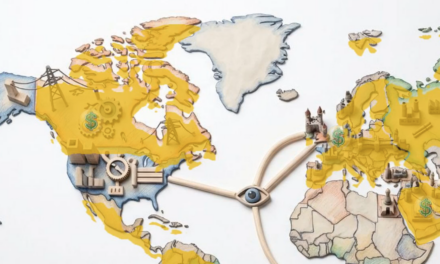
The human experience is a tapestry woven from strands of flesh and fleeting thought, but beneath this surface lies a vast, uncharted landscape: the cartography of our consciousness. For millennia, mystics, shamans, and seekers have attempted to map this invisible terrain, charting the pathways of the soul and the shimmering expanses of the astral realms. Today, as science and spirituality converge, we stand on the precipice of a new era of exploration, one that demands we reconsider the very definition of who we are and where we belong in the cosmos.
The Landscape Within: A Cartography of the Soul
The soul, that enigmatic core of our being, is often conceptualized as a spark of divine light, a pilot light in the engine of existence. But to truly understand it, we must see it not just as a point of origin, but as a territory. The cartography of the soul begins with introspection, a journey into the dense forests of our subconscious. Here, hidden among the roots of memory and the shadows of past experiences, we find the blueprints of our fears, the outlines of our desires, and the echoes of our ancestors.
This inner landscape is not static; it is a dynamic ecosystem shaped by our beliefs, actions, and even our dreams. The map of our soul is drawn in the language of symbols and archetypes, a universal alphabet that allows us to navigate the terrain of our own psyche. As we travel deeper, we may encounter plateaus of peace or valleys of despair, each terrain offering unique lessons and challenges. The cartography of the soul is not about finding a destination, but about understanding the journey, recognizing the patterns that govern our inner world, and using that knowledge to find a sense of true north.
The Astral Realms: Beyond the Veil of Consensus Reality
If the soul is the landscape within, then the astral realms are the seas that surround it. The astral plane, a non-physical dimension existing parallel to our own, has been described by those who have traveled it as a place of vibrant light, boundless creativity, and infinite possibility. It is the destination of the conscious traveler, those who have learned to loosen the knot of the physical body and navigate the astral tides using the compass of intention.
Mapping the astral realms is far more complex than cartography on Earth. Traditional maps rely on fixed points and measurable distances. The astral, however, is a realm of subjective experience, shaped by thought and emotion. Your astral map might differ drastically from mine, yet both are equally valid representations of this fluid reality.
Within the astral, travelers report encountering diverse landscapes – from shimmering crystal cities to boundless nebulae of color. They interact with entities that challenge their perceptions of life and intelligence. But the most significant feature of the astral cartography isn’t the exotic sights, but the underlying principles that govern this realm: the law of resonance, the power of thought-form creation, and the inherent interconnectivity of all consciousness.
The Interplay of the Soul and the Astral
The cartography of consciousness is not a map of two separate worlds, but a depiction of an interconnected system. The soul, anchored in the physical realm, is the traveler, while the astral is the environment it explores. Yet, the astral is also within the soul. Every dream, every flight of imagination, and every intuitive flash is a glimpse into this larger reality.
Understanding this dynamic relationship allows us to see how our inner state influences our astral experiences, and vice versa. By cultivating inner peace, clarity, and love within the soul, we become better equipped to navigate the astral realms safely and purposefully. In turn, astral exploration can provide profound insights into the nature of the soul, accelerating our spiritual growth and offering a expanded perspective on the meaning of our physical lives.
How do spirit retrievals work and why are they important?
The New Pioneers: Mapping the Unseen
We stand at a unique moment in history. The tools for navigating this inner and outer cartography are becoming increasingly accessible. Mindfulness practices, lucid dreaming techniques, and even the measured use of entheogens are opening the doors of perception for a new generation of spiritual explorers.
This is not a journey for the faint of heart. It requires courage, discipline, and a willingness to confront the unknown. But for those who heed the call, the rewards are immeasurable: a deeper understanding of oneself, a connection to the larger universe, and a profound sense of purpose.
The cartography of consciousness is an unfinished work. Each new traveler adds a fresh perspective, a newly discovered peak, a previously unrecorded astral current. Join us as we chart this magnificent, challenging, and beautiful landscape. For in navigating the soul and astral realms, we are not just mapping the unknown; we are discovering the true, limitless cartography of ourselves.
Out-of-body experiences (OBEs) and astral projection have long fascinated researchers and spiritual seekers alike. In this in-depth discussion, Michael—an expert who has documented thousands of these experiences—shares unique insights into navigating non-physical realms. His work provides a compelling look into the structure of consciousness beyond the physical body, offering a framework that blends experiential knowledge with spiritual theory.
According to Michael, the journey beyond the body often begins in what is known as the etheric plane. This level closely resembles the physical world but operates on a different energetic frequency. From there, individuals may transition into deeper layers such as the astral realm and higher states often described as heavenly dimensions. Each level presents distinct environments and experiences, contributing to a broader understanding of reality as multidimensional.
A key focus of the conversation is the concept of “retrievals.” These are experiences in which trained individuals assist disoriented or fragmented consciousnesses in moving toward more stable and elevated states. This process is described as both compassionate and purposeful, highlighting the idea that consciousness continues to evolve even beyond physical life.
Michael also explains that these non-physical journeys are rarely undertaken alone. Many individuals report the presence of unseen guides or support systems that help direct and stabilize the experience. These guiding forces are said to respond to human intention, effectively transforming focused awareness into a form of travel across different states of consciousness.
The discussion further explores the connection between out-of-body experiences and lucid dreaming. Techniques for increasing awareness during sleep are highlighted as practical entry points for those interested in exploring these states. Additionally, the idea of past-life memories or fragments is introduced, suggesting that consciousness may carry experiences across different lifetimes or dimensions.
Ultimately, this perspective presents consciousness as far more expansive than commonly understood. By examining out-of-body experiences, lucid dreaming, and spiritual exploration, a picture emerges of the soul as an evolving entity navigating multiple layers of existence. For those curious about the deeper nature of reality, this framework offers both insight and inspiration for further exploration.